Afghanistan’s isolation hasn’t stopped the region from moving. Since the Taliban’s return, Central Asian governments have edged from wary standoff to working engagement—pursuing trade, transit, and power projects that could redraw Eurasia’s map. Can railways and energy lines outrun insurgents, sanctions, and water disputes?
Over three decades, ties have swung from outright hostility to cautious cooperation. In 1996–2001, Central Asian capitals saw the Taliban as a direct security threat, citing links to the IMU, ETIM, and al-Qaida. During the U.S. war, the Taliban muted overt support for Central Asian militants, easing opposition and opening channels. The movement’s 2021 return triggered an economy-first foreign policy, and neighbors responded with a security-first pragmatism: engage Kabul to keep borders calm and trade moving—without, for the most part, formal recognition. Russia’s July 2025 recognition broke that ice; others maintain de facto relations short of de jure recognition, blending caution on rights with urgency on connectivity.
Key Developments
Recognition shock, regional recalibration.
On July 3, 2025, Russia formally recognized the Taliban government—accepting Kabul’s ambassador and accelerating security and trade contacts. That single act shifted the regional baseline, creating space for bolder economic moves while leaving most Central Asian states in a “work-with-out-recognize” lane. Tajikistan remains the outlier with the toughest stance; Uzbekistan, Kazakhstan, and Turkmenistan keep open, high-frequency channels to manage borders, counter militants, and shepherd projects.
Deals on the ground, not just on paper.
On April 21, 2025, Kazakhstan’s Deputy Prime Minister Serik Jumanğarin led a senior delegation to Kabul to discuss banking links, transit, and rail cooperation. Astana flagged up to $500 million for Afghan rail projects and a push to $3 billion in bilateral trade—anchoring a west-of-center north–south route via Turkmenistan. Follow-on MoUs have focused on the Turgundi–Herat section and customs/process upgrades that make short segments matter for network effects.
Connectivity takes center stage.
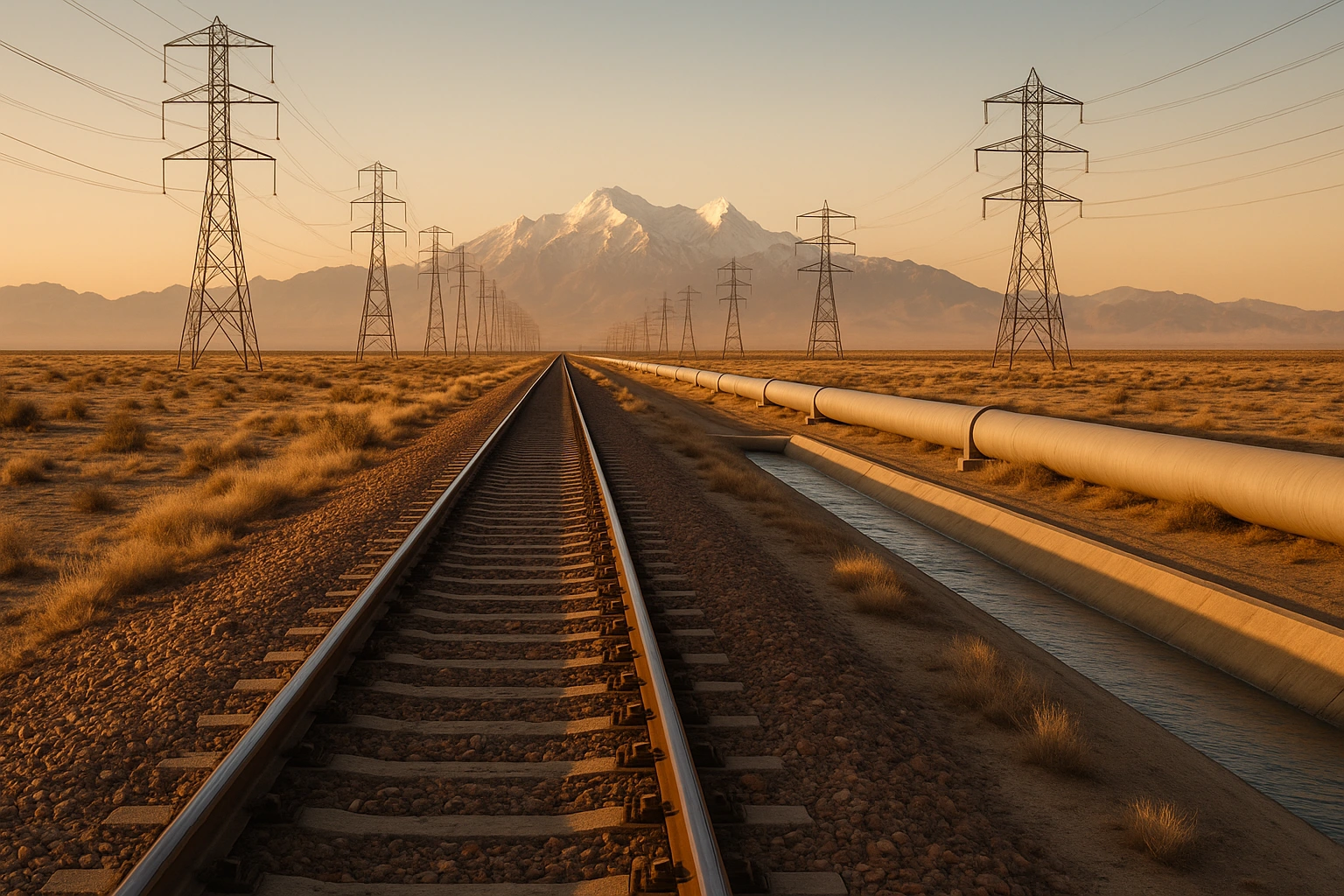
On July 17, 2025, the foreign ministers of Uzbekistan, Afghanistan, and Pakistan signed a framework agreement in Kabul to advance the Trans-Afghan railway feasibility study—an artery from Termez via central Afghanistan to Pakistan’s Kharlachi that aims to cut cargo times from roughly 35 days to 3–5 days. Early capacity targets envision an uplift from about 300,000 tons (largely by truck today) to ~3 million tons at launch, scaling toward 15–20 million tons by the late 2030s, provided security, finance, and standards converge.
Parallel tracks to the south.
Kazakhstan, Turkmenistan, and Taliban officials met in Aktau (July 2024) to explore a spur through Turgundi–Herat–Kandahar–Spin Buldak, giving Caspian-to-Pakistan flows another option. Small steps—rehabbing sidings, harmonizing tariffs, digitizing clearances—are already shaping routing math.
Power lines and pipelines inch forward.
The CASA-1000 program (about US$1.2 billion) restarted work in Afghanistan in 2024 under ring-fenced arrangements that keep donor funds away from Taliban systems while reviving a Tajikistan–Kyrgyzstan to Pakistan power bridge and paying Kabul transit fees. TAPI remains slow but not static: Afghan authorities claim limited kilometers welded inside Afghanistan by October 2025—signals of movement, not completion. Meanwhile, sanctions-shocked fuel markets have redirected flour, LPG, and petroleum flows through Afghanistan, with Herat touted as a logistics hub.
Security logic and the water wildcard.
ISIS-K and allied networks remain the spoiler risk, keeping intelligence sharing and border defense central to cooperation. A second structural risk is water: the Qosh Tepa Canal, designed to draw Amu Darya flows for northern Afghan irrigation, could reduce downstream supply to Uzbekistan and Turkmenistan, complicating trust just as rail and energy deals need it most.
Impacts and Outlooks
Political Outlook
Russia’s recognition gave Kabul its first major seal of legitimacy, but most neighbors are still calibrating engagement without formal recognition. The operating model is transactional: direct lines to Taliban ministries to prevent border incidents, interdict militants, and deconflict project corridors; steady encouragement—especially from Kazakhstan—for inclusive governance and respect for women’s rights as a condition for deeper normalization. Expect this dual-track—technical cooperation plus political distance—to hold unless rights metrics shift or a new security crisis forces alignment. Basin-wide water governance, if neglected, could become the next flashpoint, pulling diplomacy into a more contentious phase.
Economic Outlook (companies, sectors, strategies)
Rail and logistics are first movers.
Uzbekistan Temir Yullari (UTY) champions the Trans-Afghan spine to push Termez-to-port transits under a week; Kazakhstan Temir Zholy (KTZ) is aligning the Turgundi–Herat spur to funnel Middle Corridor volumes south; Pakistan Railways stands to capture northbound freight if corridor security holds and inland terminals are upgraded. Initial volumes of ~3 Mt would be meaningful enough to shift rates, with 15–20 Mt by 2035–40 transforming regional cost curves.
Energy is the long game.
Turkmengaz retains 85% of TAPI (Afghanistan, Pakistan, India at 5% each). Pledges of corridor security help, but financing, off-take certainty, and cross-border risk remain binding constraints. On power, CASA-1000 could monetize Central Asian surplus hydro and pay Afghanistan transit fees; utilities such as Pakistan’s NTDC and Tajikistan’s Barki Tojik would benefit from firmer timelines and grid stability if seasonal flows are managed and donor caution sustained.
Aviation and services are already cash-flowing.
The UAE’s GAAC Solutions manages airport ground operations and airspace services under multi-year contracts; resumed Gulf flights have restored a key artery for trade finance, cargo connectivity, and business travel.
Commodities are re-routing.
Uzbekistan–Afghanistan trade hovered around US$1.1 billion in 2024 and continued rising in 2025, driven by Uzbek exports. Kazakhstan’s exports to Afghanistan, roughly US$0.5–0.6 billion in 2024 led by flour and grain, could scale with rail. Russia, post-recognition, has pushed flour and LPG aggressively into the Afghan market. Yet risk pricing is real: the Taliban’s mid-2025 termination of the Amu Darya oil deal with China’s CAPEIC—after a 2023 signing—highlighted contract enforcement and political-risk concerns that lenders will not ignore.
Comparative Lens: BRICS Pragmatism vs G7 Conditionality
BRICS members lean pragmatic. Russia recognized the Taliban; China has pursued resource and infrastructure options (with setbacks like CAPEIC’s), and the UAE reopened aviation and airport services. The G7 holds the non-recognition line and ties normalization to rights benchmarks, even as multilaterals carve ring-fenced exceptions (e.g., CASA-1000) to mitigate regional energy risks. The result is a split screen: BRICS-aligned capital explores transport and energy assets; Western financing remains limited to carefully structured, technically necessary projects.
Regional Spotlight: Uzbekistan’s Corridor Bet
Tashkent is the locomotive of this realignment. By advancing Termez–Kharlachi while keeping an Iran option in reserve, Uzbekistan hedges against Russia-facing chokepoints and Middle Corridor congestion. Rising bilateral trade with Afghanistan strengthens UTY’s case for early works—bridges, passing loops, and integrated customs—once the feasibility study yields bankable designs.
Quick Insights
- Russia’s July 2025 recognition reset diplomatic incentives but did not trigger a regional rush to formal recognition.
- Trans-Afghan rail moved from concept to a tripartite feasibility pact, with launch capacity eyed at ~3 Mt and horizon targets of 15–20 Mt.
- Kazakhstan is positioning via Turgundi–Herat spurs and a US$500m rail investment envelope to lift trade toward US$3bn.
- CASA-1000 restarted under ring-fenced safeguards; TAPI advances slowly amid financing and security headwinds.
- The Qosh Tepa Canal could turn water politics into the decisive variable for corridor timelines.
What’s Next?
Over the next 12–18 months, three markers will signal real momentum: publication of the Trans-Afghan feasibility study with a credible blended-finance plan; award of early works and customs-modernization packages on Turgundi–Herat; and CASA-1000 disbursements tied to construction milestones. Conversely, a major ISIS-K incident along planned alignments, renewed cross-border flare-ups, or fresh contract disputes like the CAPEIC episode would push timelines right and harden lenders’ terms.